


Spirulina is a type of bacteria called cyanobacteria, also known as blue-green algae for its distinctive color.
Blue-green algae are commonly found in tropical or subtropical waters and can grow in both fresh and saltwater.
The natural color of this organism can even give bodies of water where it is found a dark green coloration.
Like plants, these bacteria are capable of photosynthesis as they contain chlorophyll, a component responsible for the characteristic color of the algae.
Despite being capable of photosynthesis, spirulina is not a plant as previously thought; due to its properties, it was considered a bacterium.
Its consumption is not a novelty; The Aztecs used to cultivate and consume spirulina for its high nutritional content.
However, it became popular when, in the late 1980s, NASA proposed to grow it in space for consumption by astronauts.
Of all the spirulina species, three, in particular, are being studied in depth for their high nutritional content and potential health value:
- Spirulina platensis.
- Spirulina maxima.
- Spirulina fusiformis.
The first two are the most commercialized worldwide and are used as a food supplement for humans and even to feed livestock.
Spirulina and Chlorella: They are not the same
While both are very similar, they have several important differences:
Spirulina
- It has less chlorophyll content.
- It grows especially in lakes and rivers, it requires a lot of suns.
- It does not need to be processed in order to be consumed.
- It is usually cheaper.
Chlorella
- It has more chlorophyll content.
- It grows especially in waters occupied by other organisms, making it more difficult to harvest.
- It must be processed so that it can be fit for human consumption.
- It is usually more expensive.
In conclusion, spirulina is easier to harvest, requires less processing, and benefits the wallet more.
Spirulina is currently considered a “superfood” because it offers multiple health benefits and has a high amount of nutrients.
Spirulina: Nutritional Information
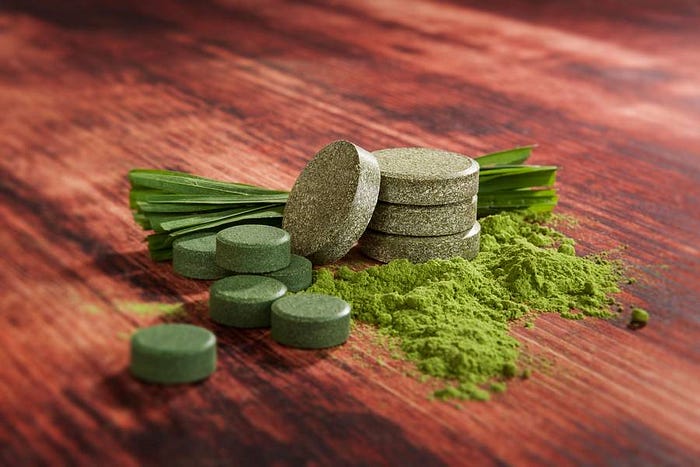
Spirulina is considered a superfood for all the nutrients it offers in small doses.
One tablespoon of spirulina powder (7 grams) contains:
- 20 calories.
- 4 grams of protein, whose quality is comparable to the protein offered by eggs.
- 7 grams of carbohydrates.
- 1 gram of fat.
- 11% of the recommended daily allowance (RDA) for thiamine.
- 15% of the RDA for riboflavin.
- 4% of the RDA for niacin.
- 21% of the copper CDR.
- 11% of the RDA for iron.
- Omega-6 and omega-3, in a ratio of 1.5: 1.
- Manganese.
- Magnesium.
- Folate
- Sodium.
- Potassium.
- Zinc.
- Match.
- Calcium.
- Selenium.
- Vitamins: K, E, B6, C, A.
However, contrary to popular belief, spirulina does not contain vitamin B12; It contains pseudo vitamin B12, which is similar to the vitamin but is not effective in humans.
Spirulina benefits
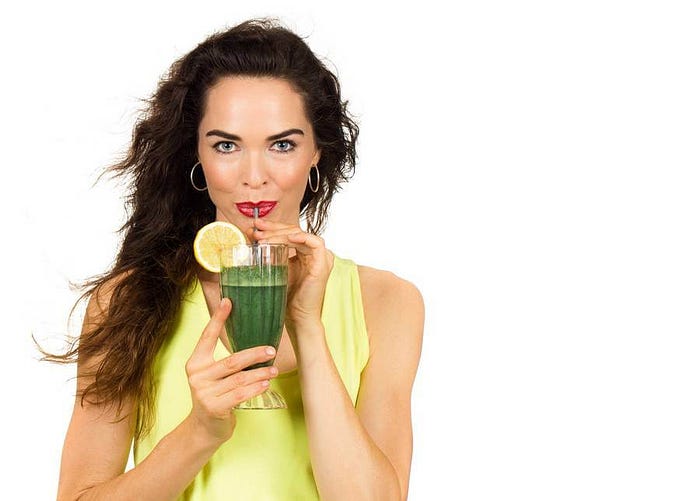
1. Spirulina is a powerful antioxidant with anti-inflammatory properties
Oxidative stress can damage not only our cells, but also our DNA, and that damage can cause chronic inflammation, which is most responsible for degenerative diseases such as:
- Alzheimer’s.
- Cancer.
- Diabetes.
- Heart disease
On the other hand, antioxidants are those responsible for counteracting oxidative stress.
In the case of spirulina, a protein called phycocyanin is responsible for its antioxidant properties, as well as its blue-green color.
Phycocyanin not only fights free radicals (causes of oxidative stress), but is also anti-inflammatory.
Athletes can benefit from these properties, as spirulina can aid recovery from exercise-induced oxidative stress, which contributes to muscle fatigue.
Although more studies are needed, clinical trials have shown promising results showing that spirulina can improve athletic performance.
2. Spirulina can lower cholesterol and triglyceride levels
One of the main causes of heart disease, apart from chronic inflammation, is the increase in the levels of LDL cholesterol and triglycerides.
Cholesterol is a fatty substance found in every cell of the body that is also necessary for some metabolic functions.
This substance is created by the liver and can also be ingested through diet.
There are several types of cholesterol, but the best known are:
- LDL, or low-density lipoproteins: They are responsible for carrying fat molecules to cells and if it is in high levels, it can cause atherosclerosis (plaque deposits inside the arteries). It is known as “ bad cholesterol .”
- HDL, or high-density lipoproteins: They are responsible for carrying fat molecules to the liver so that they are depleted. It is known as “ good cholesterol ”.
On the other hand, triglycerides are the most common type of fat in the body.
The body converts the calories it does not need into triglycerides, stores them in adipose tissue, and is transferred by LDL.
Therefore, high levels of LDL and triglycerides are linked to increased cardiovascular risk.
In the case of spirulina, it not only lowers LDL and triglyceride levels, but it also increases HDL levels; Clinical trials have found that just 1 gram of spirulina a day reduces triglycerides by 16% and LDL by 10%.
Also, due to its antioxidant properties, spirulina prevents LDL from oxidizing, preventing the development of atherosclerosis.
On the other hand, its anti-inflammatory properties can also help reduce blood pressure, with studies indicating that a dose of 4.5 grams per day can lower blood pressure in individuals with normal blood pressure.
3. Spirulina improves the symptoms of allergic rhinitis
Allergic rhinitis is an inflammation of the nasal passages caused by an inhaled allergen, such as the pollen in hay fever.
2 grams of spirulina a day improves allergic rhinitis symptoms dramatically by reducing inflammation.
4. Spirulina can help control blood sugar levels
As with allergic rhinitis, clinical trials in patients with type 2 diabetes who consume 2 grams of spirulina per day are able to rapidly lower their blood sugar levels.
5. Helps treat malnutrition and strengthens the immune system
Due to its high nutritional content, spirulina has been used in populations with malnutrition and anemia.
After 3 months of spirulina supplementation, malnourished children in Gaza had a significant increase in weight, height, and iron levels compared to children in the same conditions who only took multivitamins and minerals.
Similar results have been seen in seropositive malnourished populations, where a significant increase in immune cell levels is also observed.
HIV-positive patients who had never taken retroviral drugs obtained important improvements in their immune systems only with spirulina supplementation since among other things this bacterium increases the production of antibodies and strengthens the immune system.
6. Spirulina has neuroprotective properties
Due to its antioxidant properties, it can prevent memory loss associated with aging and oxidative stress.
Although it needs more study, spirulina promises to be an excellent treatment for neurodegenerative diseases and diseases that involve memory loss, such as Parkinson’s.
Spirulina Supplementation: Presentation and Dosage
Spirulina is available in capsules, tablets, powders, and even energy bars and smoothies.
The standard dose of spirulina is usually around 1–3 grams daily, although clinical trials have used high doses of up to 10 grams effectively and without side effects.
Spirulina: Warnings

While most blue-green algae are grown under controlled conditions, others are grown in more natural areas and may be contaminated with:
- Bacteria
- Heavy metals.
- Microcystins, toxins produced in cyanobacterial cultures that are dangerous to humans and cause liver damage.
Contaminated spirulina can cause
- Hepatic injury.
- Stomachache.
- Nausea.
- Threw up.
- Weakness.
- Tachycardia.
- Shock
- Death.
Therefore, it is vital that the supplement to choose is clinically approved and free of contaminants.
It is preferable to avoid consumption during pregnancy and lactation.
Its consumption is not recommended in children.
It is preferable to avoid its consumption in patients with autoimmune diseases such as multiple sclerosis or lupus since it activates the immune system, which can worsen the disease.
People with phenylketonuria should not consume spirulina or blue-green algae as they contain phenylalanine.
Spirulina: In conclusion
- Spirulina is a bacteria from the blue-green algae family.
- It is a superfood for its high nutritional content.
- It is a powerful antioxidant and anti-inflammatory that protects the heart, brain, and immune system.
- It can be consumed in capsule, tablet, or powder form.
- It must come from controlled crops as contaminated spirulina can be dangerous and even deadly.
Source: https://sharonelyons.medium.com/spirulina-health-benefits-dosages-and-warnings-51e886f7d091
Pas de commentaires